Table of Contents
- Service-area vs storefront vs hybrid business
- Pros and cons of the service-area model
- Pros
- Cons
- Google Business Profile setup checklist
- One strong area page vs many city pages
- What a useful local landing page should include
- Example: appliance repair business in Delhi NCR
- Local signals to improve over 90 days
- Mistakes that can suppress trust
- Official sources
Short answer: a service-area business that visits customers but does not serve them at its address should hide the address on Google Business Profile and define the real areas it serves. Local SEO success then depends on accurate profile information, a trustworthy website, relevant service coverage, reviews and consistent real-world prominence—not adding dozens of city names.
Service-area vs storefront vs hybrid business
| Business type | Customer interaction | Profile approach |
|---|---|---|
| Service-area business | Travels or delivers to customers; no customer-facing location | Hide address and add genuine service areas |
| Storefront | Customers visit a staffed, signed location | Show the eligible business address and hours |
| Hybrid | Serves customers at the location and also travels to them | Show address and set service areas only when both are genuine |
Google states that a business without permanent on-site signage is not eligible as a storefront. A virtual office, lead-generation location or address where customers are not served should not be used to create a local advantage.
Pros and cons of the service-area model
Pros
- Matches how plumbers, cleaners, repair teams and other mobile providers actually work.
- Protects a private or non-customer-facing address.
- Communicates coverage to prospective customers.
- Supports local discovery without pretending to operate a storefront.
Cons
- A large service area does not automatically improve ranking across every city.
- One profile generally represents the whole service operation, so fake duplicate profiles are risky.
- Businesses still need local relevance, reviews and strong web pages for competitive areas.
Google Business Profile setup checklist
- Use the real-world business name without keyword additions.
- Select the most specific primary category and only relevant additional categories.
- Hide the address if customers are not served there.
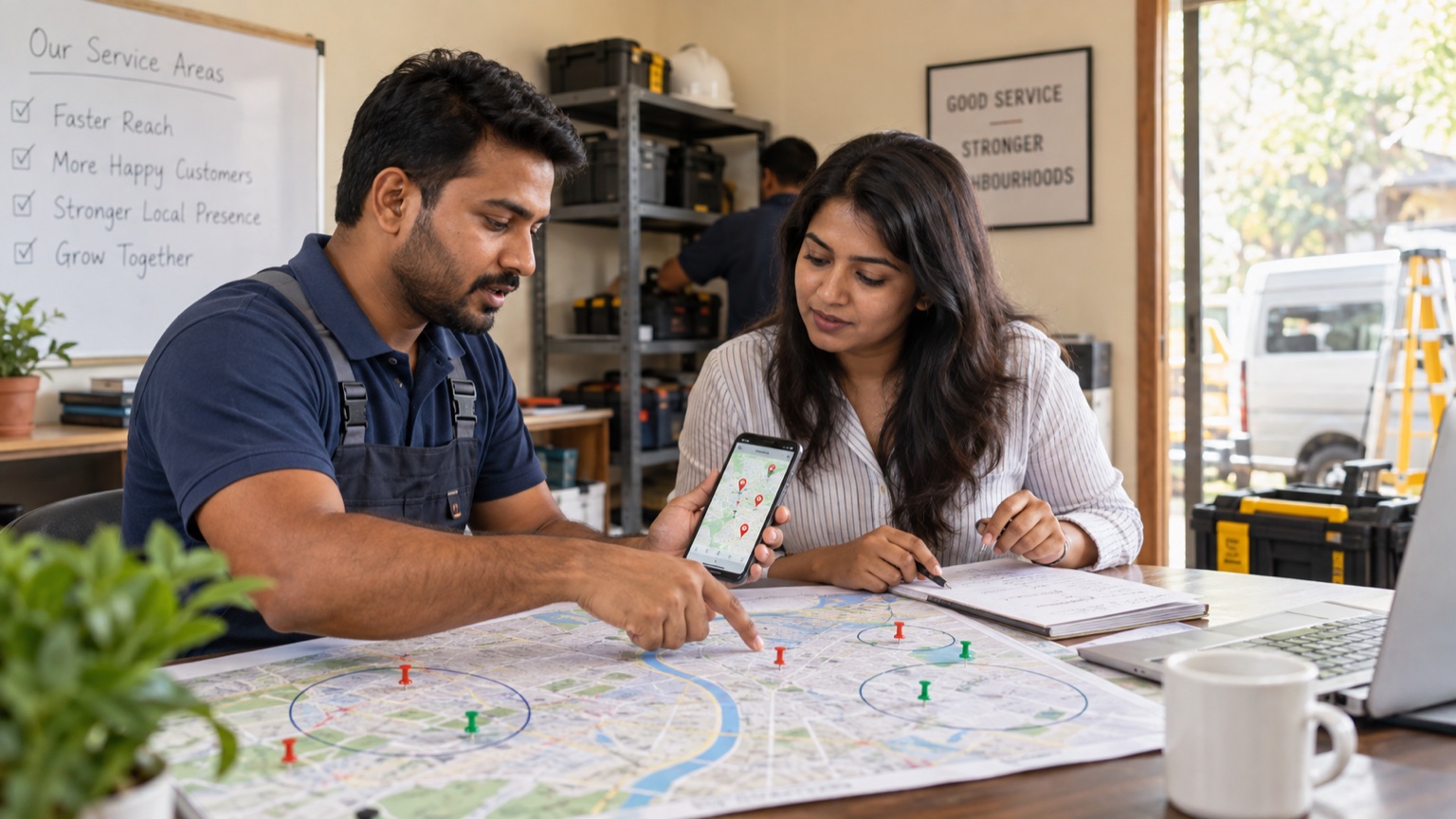
- Add areas you genuinely reach within a practical operating range.
- Publish accurate phone, website, hours and service details.
- Add original photos of the team, vehicles, equipment and completed work.
- Create services with plain-language descriptions and honest scope.
- Use a review request process that does not offer incentives or filter unhappy customers.
- Respond to reviews naturally and protect customer privacy.
- Review edits, calls, messages and profile performance regularly.
One strong area page vs many city pages
| Approach | When it works | Common failure |
|---|---|---|
| One service-area page | Small operation with overlapping nearby coverage | Page becomes too generic and lacks service detail |
| Individual city pages | Real demand, distinct proof, logistics and customer examples for each area | Only the city name changes, creating thin duplicate content |
| Service + area hub | Multiple services and regions need clear navigation | Too many combinations create crawl waste and confusing pages |
What a useful local landing page should include
- The exact service and the customer problem it solves
- Areas covered and realistic response or delivery expectations
- Original local project examples or testimonials with permission
- Pricing factors and what is included
- Team qualifications, guarantees and safety or compliance information
- Frequently asked local questions
- A visible phone, enquiry or booking action
- Links to related services and nearby coverage—not every city in a hidden footer block
Example: appliance repair business in Delhi NCR
The company can maintain one legitimate Business Profile for its service operation, define the real areas it reaches and build a helpful coverage page. A separate Gurgaon page makes sense only if it explains Gurgaon-specific availability, travel windows, service examples and customer needs. Copying the Delhi page and replacing the city name creates little value.
Local signals to improve over 90 days
Days 1–30: correct profile data, category, address visibility, services, website link and tracking. Days 31–60: publish original team and job photos, improve core service pages and request legitimate reviews. Days 61–90: add useful local case examples, earn relevant local mentions and compare calls or qualified enquiries by source.
Mistakes that can suppress trust
- Creating profiles for every city without staffed eligible locations
- Using a residential or virtual-office address as a public storefront
- Adding service keywords to the business name
- Buying reviews or asking only satisfied customers
- Setting areas far beyond practical operations
- Building hundreds of near-identical location pages
For a profile and website plan, see our local SEO and Google Business Profile service, SEO service and local lead generation campaigns.